
Individual
A person supported or engaged by a programme.
CORE / Participants
Register participants and operational entities once, identify them reliably and reuse the same records throughout programme delivery.
See the structure
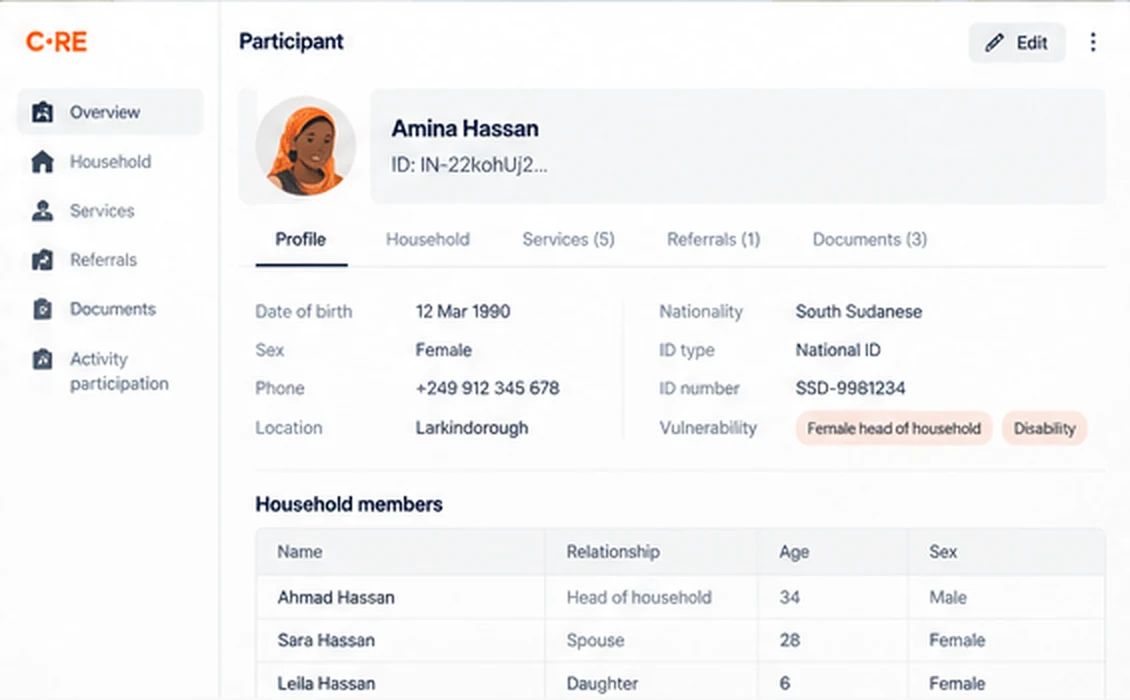
CORE does more than store a list of names. It documents how participant layers connect: individuals can belong to households, collectives or facilities, and teams can navigate these links when they are authorised to do so.
01 / A connected participant model
CORE uses four participant/entity layers so programme information can reflect different types of humanitarian delivery.
A person supported or engaged by a programme.
A household represented and managed as a connected entity.
A group or collective that participates as an entity.
A facility or site supported through programme activities.
02 / Identify once
Every record receives a unique CORE ID. Existing or external identifiers can also be retained, allowing organisations to migrate and integrate data without abandoning identifiers they already use.

WHO — Participant · WHAT — Activity · WHERE — Location · FROM WHOM — Team. These elements meet in the Activity Implementation, where actual programme delivery is documented.
03 / Relationships & social structure
CORE can document detailed relationships between participant entities, allowing authorised users to understand and navigate the social structure around the people and entities a programme works with.
The participant is never isolated from context. CORE keeps the operational picture around the person: social structure, location, assistance history and related records.
Document household membership, representatives and relationships between people.
Connect individuals or households to groups, committees or other collectives.
Document relevant relationships with facilities or sites supported by programmes.
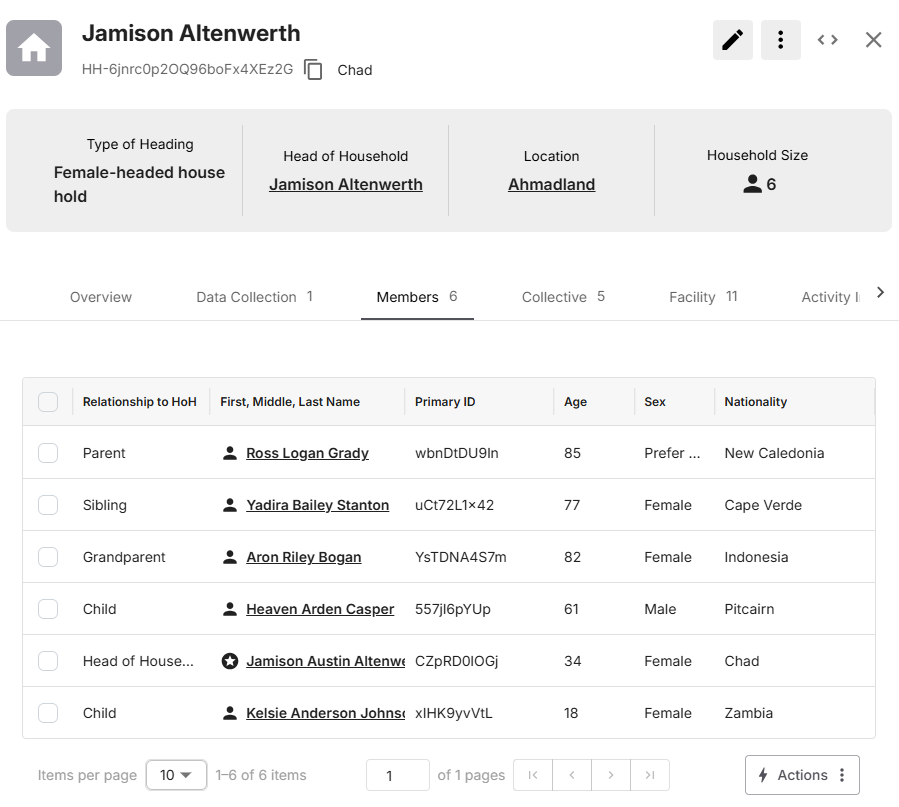
04 / Connected operational history
Subject to need-to-know permissions, a participant record can provide a connected view of services received, Activity Implementations, referrals, follow-up and the full detail of Forms & Assessments collected. This helps frontline teams understand previous interactions before deciding what should happen next.
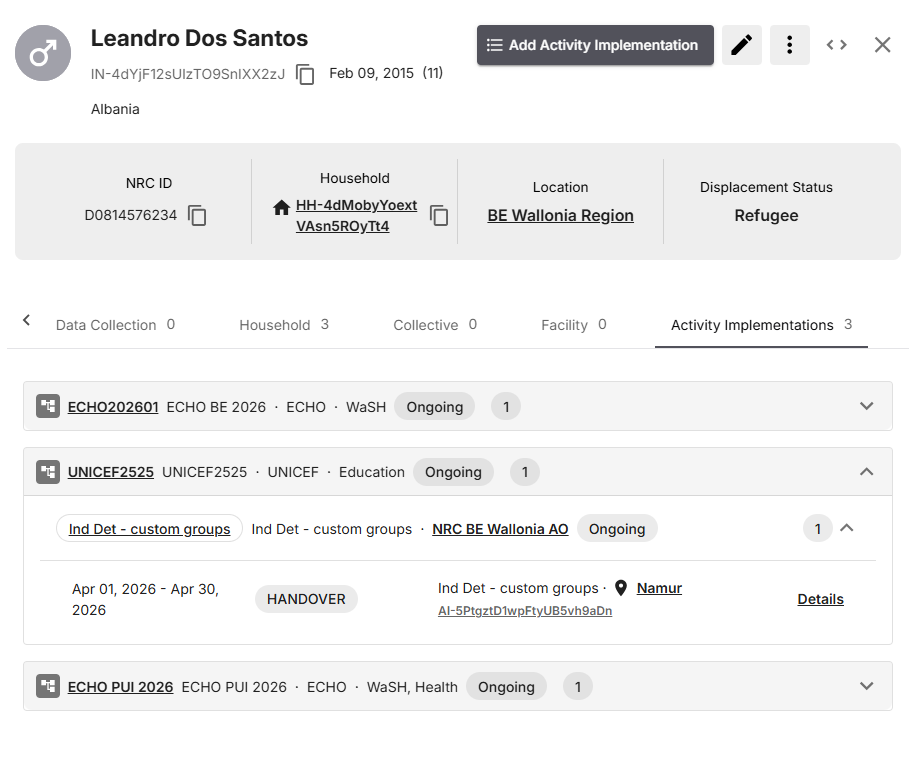
Connected participant information helps teams avoid duplicate work, missed follow-up and fragmented histories — while producing structured data that can also support quality assurance, aggregation and reporting.
See Programme ManagementSee CORE in action
Participants: Individuals → Participants: Households, Collectives & Facilities →